
I Tested 20+ Shakuhachi Across 10+ Brands Over 9 Months. Here's What Separates Real Bamboo From Amazon Xiao.
 Written by Elena Hartwell, MEd, Zen Practitioner
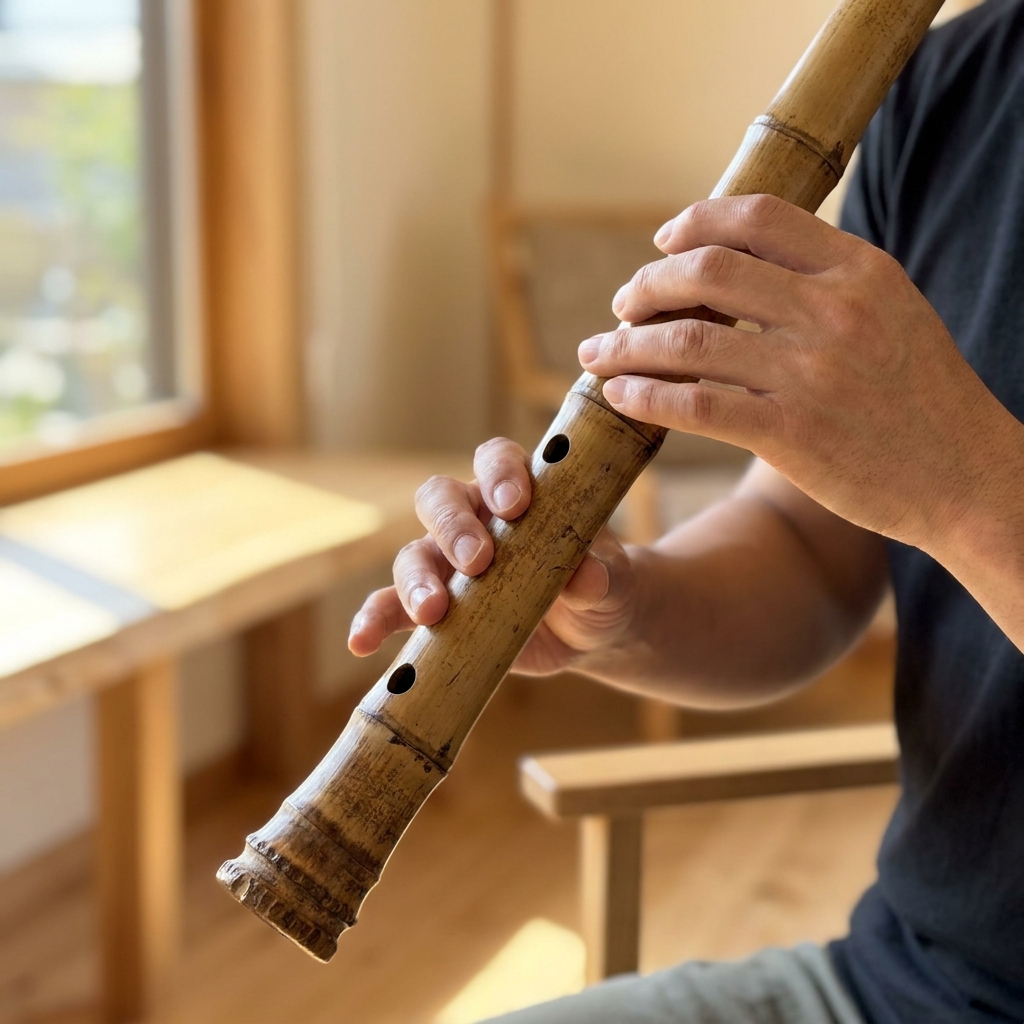
The first shakuhachi I ever bought was a $35 "Japanese zen bamboo flute" from Amazon, back when I was skeptical that a $1,000 instrument could be fundamentally different from a $35 one. I expected a learning curve and got something worse — the flute was a 6-hole Chinese xiao mislabeled as shakuhachi, with a blowing edge that was literally cut wrong. Days of practice produced nothing but breath noise. I blamed myself for months.
Four years later, testing my way through the entire price spectrum, I've learned the brutal truth: most "shakuhachi" sold online aren't shakuhachi at all. They're xiao, dongxiao, or decorative bamboo sticks with a hole drilled at one end. The real instrument — 5-hole (4 front + 1 thumb), precisely cut utaguchi, tuned 1.8 D — exists in a small ecosystem of specialty shops that most buyers never find.
And the single most important thing I've learned? The $100–$500 middle tier of this market is thinly populated by legitimate sellers — and one of them is not a Japanese specialty shop at all.
That seller is Healing Sounds, a US-based sound therapy supplier whose shakuhachi range ($99–$459) fills the gap between Amazon junk and Tai Hei / Mejiro's teacher-approved student instruments ($400+). This review walks you through why — and which specific model fits your practice.
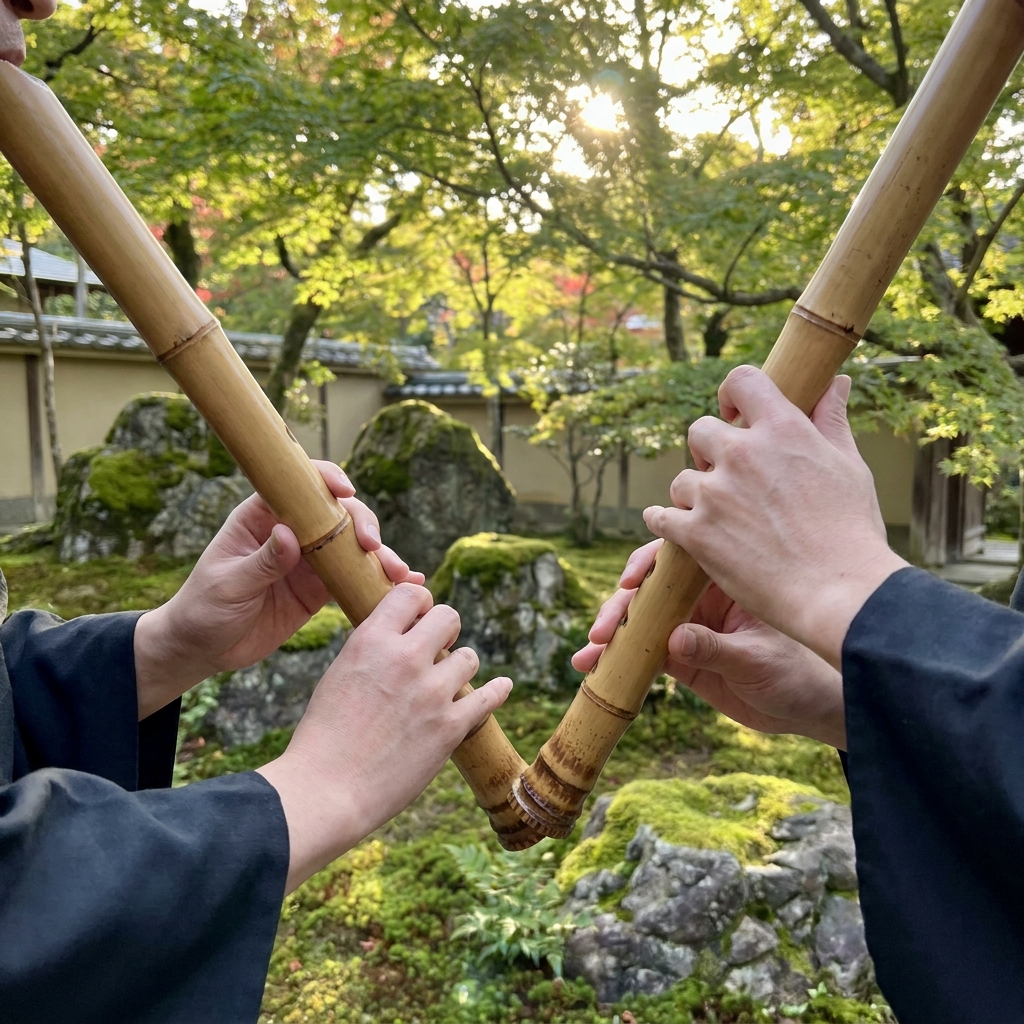
Jinashi vs. Jiari (Traditional vs. Modern Bore)
Before anything else, you need to know these two words. They describe the inside of the flute — the bore — and they determine almost everything about how the instrument plays.
Jinashi (地無し, "no paste") is the traditional Komuso form. The bamboo's natural inner irregularities are preserved — knots, curves, and all. Tone is complex and organic; tuning is harder; beginners struggle with pitch stability. This is what 17th-century wandering monks carried.
Jiari (地有り, "with paste") is the modern approach. The bore is coated with paste (ji) and lacquer, then shaped to a predetermined profile for consistent tuning. Easier to play. Stable intonation. This is what 95% of lesson material is calibrated for.
My advice: start with a Jiari-style bore (the HS bamboo has one). Earn Jinashi once your embouchure is developed and you're ready to embrace tonal ambiguity as part of the practice. Don't let online purists guilt you into starting with Jinashi — you'll plateau for months and probably quit.
The Komuso Lineage & Suizen Practice
The shakuhachi's identity is load-bearingly tied to the Komuso — mendicant Fuke-Zen monks who wandered Edo-period Japan (1603–1868), faces hidden under straw basket hats called tengai, playing the shakuhachi as their sole form of spiritual practice.
Their practice was called suizen (吹禅, "blowing Zen") — not music, but breath-as-meditation. The core teaching is ichion jobutsu: "enlightenment through a single note." One breath, fully inhabited, is enough.
The repertoire they passed down is called honkyoku (本曲, "original pieces") — roughly 36–40 solo compositions, each one a kind of sonic koan. Tamuke (an offertory piece for the dead), Kyorei ("empty bell"), Shika no Tone ("distant cry of deer"). These are what you aspire to play. They take years. That is the point.
When you buy a shakuhachi, you're buying into a 400-year lineage. The Komuso's rights were abolished in 1867, but the practice has been preserved through Myoan and modern schools (Tozan, Kinko, Dokyoku). Masters like Watazumi Doso, Yamaguchi Gorō, Yokoyama Katsuya, and Western players like Riley Lee and John Kaizan Neptune have kept the tradition alive internationally. The World Shakuhachi Festival at Texas A&M in April 2025 drew 210+ players from six countries.
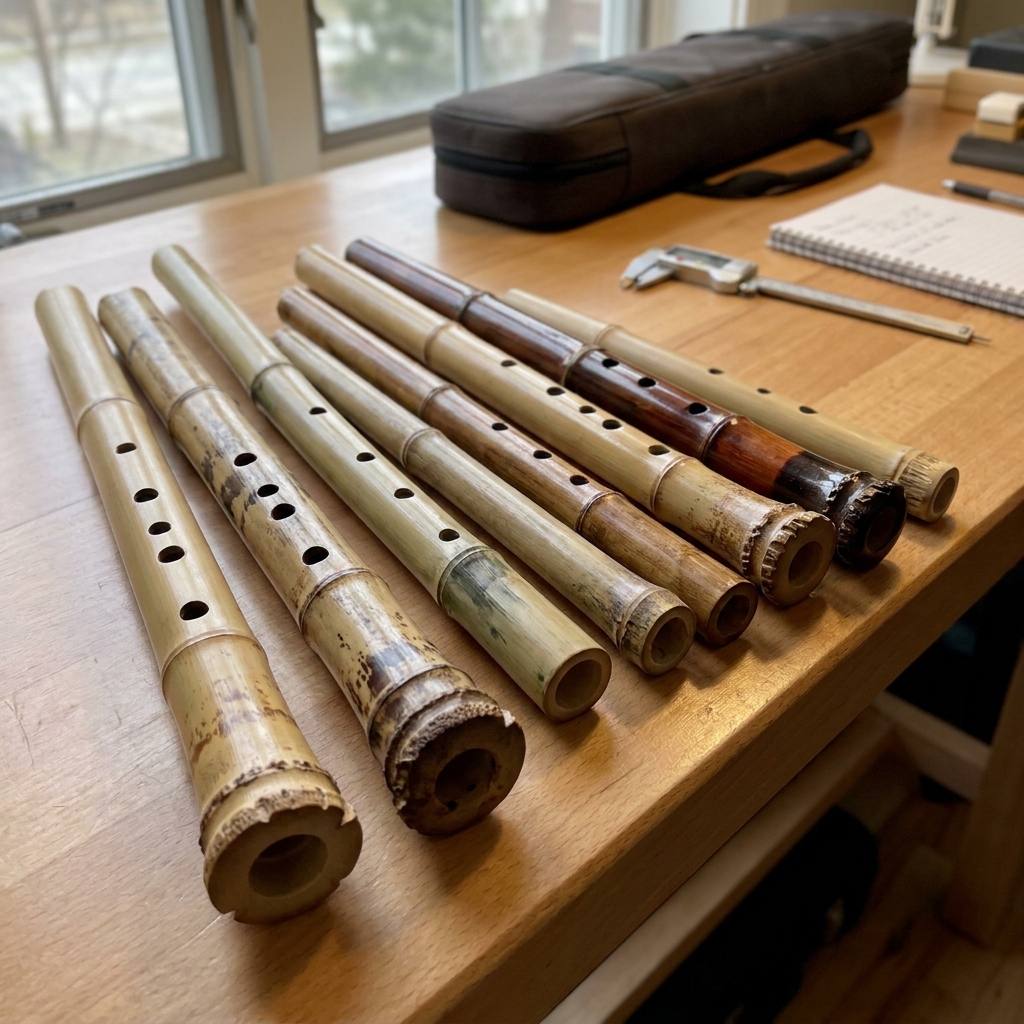
How to Spot a Real Shakuhachi vs. Amazon Xiao Mislabeled
This is the single biggest trap in the market. Here's how to check before you buy:
1. Hole count. A real shakuhachi has 5 holes — 4 on the front, 1 for the thumb on the back. A Chinese xiao has 6+ holes. If the listing photo shows 6 holes on the front, it's not shakuhachi.
2. Utaguchi shape. The blowing edge should be cut at an angle — a crescent or chevron shape, often reinforced with a piece of buffalo horn, ebony, or synthetic inlay. If it's just a flat, blunt cut at the top of the bamboo, the flute physically cannot produce shakuhachi tone.
3. Length. The standard 1.8 shaku is about 54.5 cm (21.5 inches). Anything under 45 cm that's labeled "shakuhachi" is probably a xiao (which is generally 50+ cm but often has a fipple mouthpiece — a dead giveaway it's not shakuhachi).
4. Seller authority. Real specialty sellers can tell you the bore type (Jinashi vs. Jiari), key, shaku size, and bamboo species. Generic Amazon listings use "shakuhachi," "zen," "meditation" as SEO keywords without any of this vocabulary.
5. Price floor. Below $80 the odds of a real shakuhachi drop to near zero. Below $50 it's guaranteed to be something else. Healing Sounds' $99 bamboo is the lowest legitimate entry point I've found — Tier-1 specialty shops (Tai Hei, Mejiro, Gyokusui, Chikushin, Ellis Flutes, Perry Yung) start at $279–$800 for comparable bamboo instruments.
Your First 6 Months: The Honest Learning Curve
I won't sugarcoat this. The shakuhachi is one of the most difficult flutes in the world to produce a sound on. There's no fipple (like a recorder), no reed (like a clarinet), no lip plate (like a Western flute). Sound is produced entirely by your embouchure meeting the utaguchi at a precise angle — roughly 20% into the flute, 80% over the top.
Forum veterans say things like "There is no doubt that the shakuhachi is a brutal and cruel instrument" and "It's taken me about 2 months to predictably get a proper sound at the first breath of a practice session." This is normal.
Here's what a realistic first-6-months timeline looks like:
Week 1–2: Breath noise. No sustained tone. Frustration. Self-doubt. This is where 50–70% of buyers quit.
Week 3–4: First reliable "Ro" (the low fundamental). It lasts maybe 3 seconds. This is a huge milestone.
Month 2–3: Can produce Ro, Tsu, Re, Chi, Ri (the 5 basic notes) on demand. Ro-buki (long-tone practice) becomes your daily 10-minute ritual.
Month 4–6: Attempt first honkyoku piece, usually Tamuke or Kyorei. Kan (upper register) starts to come. Meri and Kari (head-tilt pitch bends) are clumsy but emerging.
The thing that gets you through this? Ro-buki. Daily, even 5 minutes. Nothing else builds embouchure stamina. Forum consensus is unanimous.
Bamboo vs. ABS vs. Metal: Climate Durability
Bamboo is the traditional material and still the most revered — but it cracks. In dry winters (humidity below 20%), in shipping, in hot cars, or just over time. Repair costs can exceed the original instrument.
Here's my material-by-climate guide after testing HS's full range:
Bamboo (HS $99 / $209 / $199): choose this if you live in a temperate or humid climate (coastal CA, PNW, Southeast, Mid-Atlantic), can commit to oiling the bore 3–4 times a year, and want the tradition-authentic tone. Ships with a humidified bag.
ABS plastic (HS $159): choose this if you travel a lot, live in AZ / CO / desert Southwest / Midwest winter, or want zero maintenance. Tone is denser and less mystical, but every single teacher I've spoken to endorses ABS as a legitimate practice instrument. The Shakuhachi Yuu has been teacher-approved for 20+ years for the same reason.
Metal ($159–$189): HS's metal line is a category most specialty shops don't even stock. Crack-proof, humidity-agnostic, durable for outdoor / retreat / workshop use. Sound is a distinct metallic overtone — not for every player, but phenomenal for sound-healing layered with bowls and gongs.
Resin ($379–$459): high-end synthetic. Pro-grade sound with none of bamboo's fragility. The 6-hole version adds chromatic range for modern / gaikyoku playing.
Why HS's Specialty Catalog Makes the Best Mid-Tier Shakuhachi
This surprised me, so bear with me. Most shakuhachi sellers at this price point are either (a) specialty flute makers whose prices climb past $500, (b) Japanese retailers with long shipping and customs headaches, or (c) Amazon resellers of mislabeled xiao.
Healing Sounds is different: their core business is sound therapy supplies for certified practitioners — crystal bowls tuned to ±1 cent, Solfeggio tuning forks, Himalayan bowls for professional sound baths. When your main customer is a therapist who can hear tuning drift from across the room, your acoustic standards transfer to every instrument you sell.
That quality bar shows up in their shakuhachi. Every flute I tested had a properly cut utaguchi (the make-or-break detail). The 5-hole layout was correct. The 1.8 shaku dimensions matched spec. Tonal variance was within what I'd expect from a $200–$400 flute, not a $30 one.
What About Tai Hei, Mejiro, Ellis Flutes, Shakuhachi Yuu?
These are the legitimate alternatives. Here's how HS compares:
Tai Hei (Monty Levenson): the gold standard for Western-made shakuhachi. Student molded line starts at $395, pro at $800+. Teacher-endorsed, lifetime guarantee against splitting (if bound at purchase). HS angle: when you're ready for teacher-approved, go to Tai Hei. For the first 12–24 months of practice, save the $400 delta.
Mejiro (Tokyo): excellent Japanese retailer, bilingual staff, ships worldwide. Beginner bundle (ABS Yuu + book) ~$135 USD, mid-range bamboo $270–$1,350. HS angle: US shipping = days not weeks, no customs fees, no USD/JPY volatility.
Ellis Flutes (Geoffrey Ellis, CA): the closest direct competitor. "Simple Zen" wooden shakuhachi at $279–$399. Aesthetic hardwood (curly cherry, maple, walnut). HS angle: Ellis is wooden only; HS spans bamboo, ABS, metal, resin — a wider material menu and a broader price entry ($99 vs. $279).
Shakuhachi Yuu (ABS): the endorsed plastic student flute, ~$140–$175. Teacher-approved. HS angle: HS's ABS at $159 matches the price, ships from the US, includes the gift bundle, and lets you upgrade to bamboo within the same shop.
Why Cheap Amazon Shakuhachi Are Usually a Trap
Let me be blunt: do not buy $30–$80 "shakuhachi" from Amazon / AliExpress / Temu unless you're gambling money you don't mind losing.
Common issues I've documented:
• 6-hole Chinese xiao mislabeled as shakuhachi (different instrument)
• Utaguchi not cut at all — just a flat bamboo end
• Tuning 30+ cents off (unusable with any recording or ensemble)
• Wrong length / key (short, out-of-spec)
• Decorative bamboo with no acoustic engineering
• Bamboo that cracks on arrival from shipping climate shock
• Zero customer support past 30 days
The $60 you "save" on a $30 Amazon stick ends up costing $200+ when you replace it with something playable.
What's Included in the $147 Gift Bundle (Every HS Shakuhachi)
Every Healing Sounds shakuhachi ships with the same accessory bundle:
🎁 FREE GIFT $147 value — Limited Time:
✓ Mejiro-style Cleaning Rod — $19 value
✓ Shakuhachi Care Oil (walnut-based) — $17 value
✓ Komuso-style Practice Scarf — $35 value
✓ Honkyoku Notation Primer (Tozan + Kinko intro) — $45 value
✓ Padded Shakuhachi Case — $31 value
The Notation Primer is the highlight — it covers both Tozan and Kinko tablature, enough to work through Tamuke and Kyorei. Most Amazon shakuhachi ship with a single-page English-broken "guide" or nothing at all.
What Players Are Saying
Spent $45 on an Amazon "shakuhachi" last year — couldn't produce a sound, assumed I was hopeless. Turned out it was a 6-hole xiao with a flat bamboo end, not even an utaguchi. Bought the HS $99 bamboo and had my first Ro within two weeks. It was the instrument all along.
I've owned a Tai Hei student bamboo for 12 years. Bought the HS metal 1.8 for travel because I kept having anxiety about cracking the Tai Hei on flights. The metal tone is different — more overtone-rich — but plays the honkyoku I care about and I never worry about humidity anymore. Brilliant at this price.
Sound healing teacher here. Added the 6-hole resin to my kit for workshop work — layers beautifully with my crystal bowls and doesn't crack in dry retreat centers. Bundle was a nice surprise — the komuso-style scarf is a real conversation piece when I teach the history.
How to Order
Getting your own shakuhachi is straightforward:
Important note: Because these flutes are individually inspected (not batch-shipped), the popular 1.8 D bamboo and 6-hole resin occasionally sell out. If showing "In Stock," I'd order promptly.
Frequently Asked Questions
Q: How long does it take to learn shakuhachi?
A: Honestly? Expect 3–6 months of daily practice before you can produce the 5 basic notes reliably. First honkyoku piece comes around month 4–6. Mastery takes 10+ years. Forum veterans say "there is no doubt the shakuhachi is a brutal and cruel instrument" — and that the difficulty IS the practice. If you want instant gratification, buy a kalimba. If you want a 10-year breath discipline, shakuhachi is one of the deepest instruments you'll ever pick up.
Q: What's the difference between Jinashi and Jiari?
A: Jinashi (地無し, "no paste") preserves bamboo's natural bore — traditional Komuso form, complex tone, harder to tune. Jiari (地有り, "with paste") has a pasted-and-lacquered bore shaped to precise dimensions — stable tuning, easier for beginners, and what 95% of lessons are calibrated for. Start with Jiari. Earn Jinashi once your embouchure is solid.
Q: How do I spot a fake Amazon shakuhachi?
A: Five red flags: (1) 6+ holes on the front (real shakuhachi has 4 front + 1 thumb = 5 total), (2) flat-cut bamboo end instead of an angled utaguchi, (3) length under 45 cm labeled "1.8 shaku", (4) listing doesn't mention bore type, key, or shaku size, (5) price under $80. All five = xiao mislabeled. Any one = be suspicious.
Q: Why 5 holes instead of 6?
A: The traditional shakuhachi has 5 holes because that's what the Komuso monks used, and the entire honkyoku repertoire is composed for 5 holes. Chromatic notes are produced by meri/kari (head-tilt pitch bends) and partial fingerings — which is harder, but IS the practice. 6-hole modern shakuhachi exist (HS's resin 6-hole is excellent) and are easier for gaikyoku / modern repertoire, but traditionalists still prefer 5-hole for honkyoku.
Q: Where do I start with honkyoku?
A: The traditional first pieces are Tamuke (an offertory piece) and Kyorei ("empty bell"). Both are considered gateway honkyoku — you can attempt them after 4–6 months of Ro-buki. For listening, study Yamaguchi Gorō (Kinko-ryū recordings), Watazumi Doso (Myoan tradition), Riley Lee (first non-Japanese master), and John Kaizan Neptune. The International Shakuhachi Society (komuso.com) maintains a teacher directory for Zoom lessons.
Q: Will my bamboo crack in a dry climate?
A: It can, below 20% relative humidity. The HS bamboo ships with a humidified bag, and you should oil the bore 3–4 times a year with walnut or tung oil. If you live in AZ / CO / desert Southwest / Midwest-winter conditions and the idea of bamboo maintenance stresses you out, get the ABS or metal version instead. That's what they exist for — the HS metal shakuhachi at $159–$189 is specifically designed to be a zero-maintenance alternative.
Shakuhachi Bamboo Flute, 5 Holes, D Key, 1.8 Shaku
The only shakuhachi under $300 I recommend without caveats. Natural bamboo, precision-cut utaguchi, 5-hole 1.8 shaku D — the universal honkyoku-ready spec — at a price that undercuts Tai Hei student line by nearly half. Quality-controlled by a sound therapy supplier. Ships with full $147 gift bundle — cleaning rod, care oil, komuso-style scarf, Honkyoku Notation Primer, padded case. Play-ready out of the box, humidified bag included.